
Is it Eczema, Or Psoriasis? How to Tell Them Apart
Both psoriasis and eczema are skin inflammatory diseases that have enough similar symptoms that even non-dermatologist doctors have trouble diagnosing between the two. But, they have different causes and different treatment options, so it’s best to get a proper diagnosis for proper treatment. The best course of action is to see a dermatologist, but if that is not an option, here are some useful tips in telling them apart.
Prevalence & Causes
Eczema is more prevalent, as over 30 million Americans have eczema, versus 7 million Americans having Psoriasis. Eczema prevalence has surged over the recent decade all over the world. In addition to genetics, you are at increased risk of developing eczema if you live in an arid climate, reside in a large metropolitan area, or have a family history of eczema or different allergies.
Typically, eczema first manifests itself in childhood and continues throughout adulthood, either with periodic flares or chronic (long-lasting), but first outbreaks can also appear in adults. While psoriasis occurs in only 1% of children, typically, the first age-onset group for psoriasis is between 15 – 30 years, and then it also manifests among the 50 – 60-year-old age group. About 65% of eczema occurs before age 1 – and 90% occurring before age 5. 65% of children continue to suffer from eczema as adults.
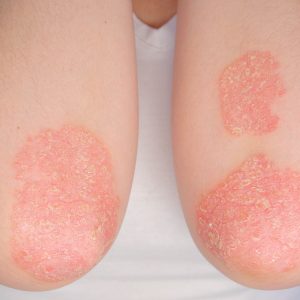
What Does Psoriasis Look Like?
Psoriasis is an autoimmune skin disease. In normal skin, every 23 – 30 days, our skin grows new cells, which start-up in the deepest layers of the skin and gradually rise to the surface, which are then shed. With psoriasis, the whole skin cell process is accelerated and what normally occurs every 23 – 30 days, takes as little as 2 – 3 days to occur. This results in an overgrowth of skin cells that accumulate on the skin surface, resulting in itchy patches called plaque, with reddish, white, or silvery scales. Psoriasis plaques are thicker and more inflamed than with eczema. Psoriasis plaques are itchy and your skin may sting or burn. Needless to say, these plaques are very painful and take their toll on the psoriasis sufferer, both physically and emotionally.
Psoriasis often shows up on:
- Elbows, Knees, Scalp, Lower Back, Palms of Hands, Soles of Feet
- Fingernails, Toenails, Mouth, Lips, Eyelids, Ears, Skin Folds
Up to 40% of psoriasis sufferers also have psoriatic arthritis, a joint disease that can cause permanent damage if not treated by a doctor. Also, people with psoriasis often have other medical conditions such as heart disease, high blood pressure, type 2 diabetes, and obesity.
What Does Eczema Look Like?
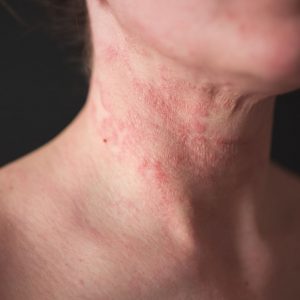
Eczema is a medical condition where the skin barrier function is weakened, creating “holes” that leave the skin unprotected and unable to protect the skin against outside substances/invaders. Eczema skin gets irritated, inflamed, and covered with numerous lesions. The word “eczema” comes from the ancient Greek word that can be interpreted as “to boil over”.
Eczema can either be inherited or triggered by harsh environmental factors.
It often appears as red, dry patches of skin that are very itchy on parts of the body that bend – like elbows and knees, but it can also appear on your wrists, ankles, and neck.
People with asthma and allergic conditions often develop eczema.

Understand why eczema flares up at night and what you can do to sleep better

Learn how diet and lifestyle changes can help manage your eczema symptoms

Discover natural alternatives for treating eczema and relieving itchy skin

Discover how oral eczema treatment can transform your skincare approach

Review clinical studies on eczema treatment effectiveness with Loma Lux

Learn how your diet affects eczema and which foods can help reduce flare-ups

Establish an effective daily skincare routine for eczema management and prevention

Discover the different types of eczema and how to identify which type affects you

Learn everything about eczema - causes, symptoms, and how to manage this common skin condition
